Few exterior finishes are as instantly appealing as cedar. Its warm tones and natural grain give a house character that plain painted walls rarely match. Real cedar, however, comes with a long list of obligations: regular staining, protection against moisture and insects, and growing concern about fire. That is why cedar look siding has become one of the most popular exterior choices today. Modern materials can reproduce the texture and color of cedar while removing most of the upkeep. This guide compares the main options, explains how fiber cement measures up against real wood, and shows how to get the most from a wood grain facade.
Why Cedar Look Siding Is So Popular
Cedar has earned its reputation. The heartwood of western red cedar contains natural compounds that inhibit decay fungi and termites, and the wood is light, stable and easy to work. Its straight grain and warm reddish-brown color suit everything from rustic cabins to modern farmhouses.
The challenge is keeping that look. Cedar is still a natural material exposed to sun, rain and temperature swings:
Finishes wear out. Even a well-applied solid-color stain system on cedar is expected to last around 8 to 10 years, according to the USDA Forest Products Laboratory, and lighter stains need attention more often. Each refinish means cleaning, prep work and labor.
Natural resistance has limits. Only the heartwood carries strong decay resistance. Sapwood in lower grades lacks it, and any cedar that stays wet behind trim or at ground level can still rot.
Wood is combustible. In wildfire-prone areas and on closely spaced houses, building codes increasingly favor noncombustible or ignition-resistant siding.
Cedar look siding aims to keep the appearance while removing these problems.
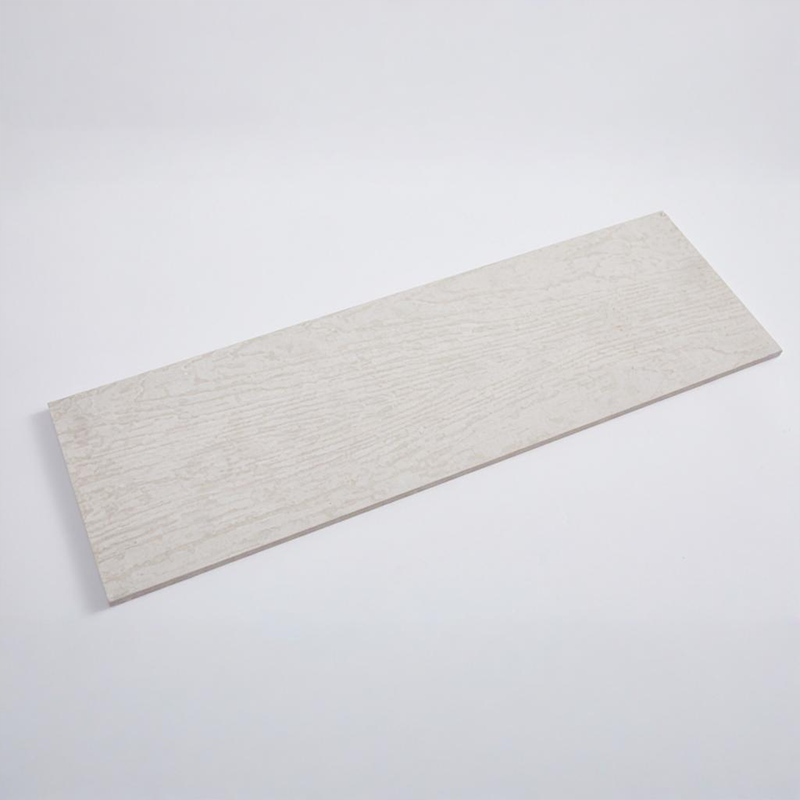
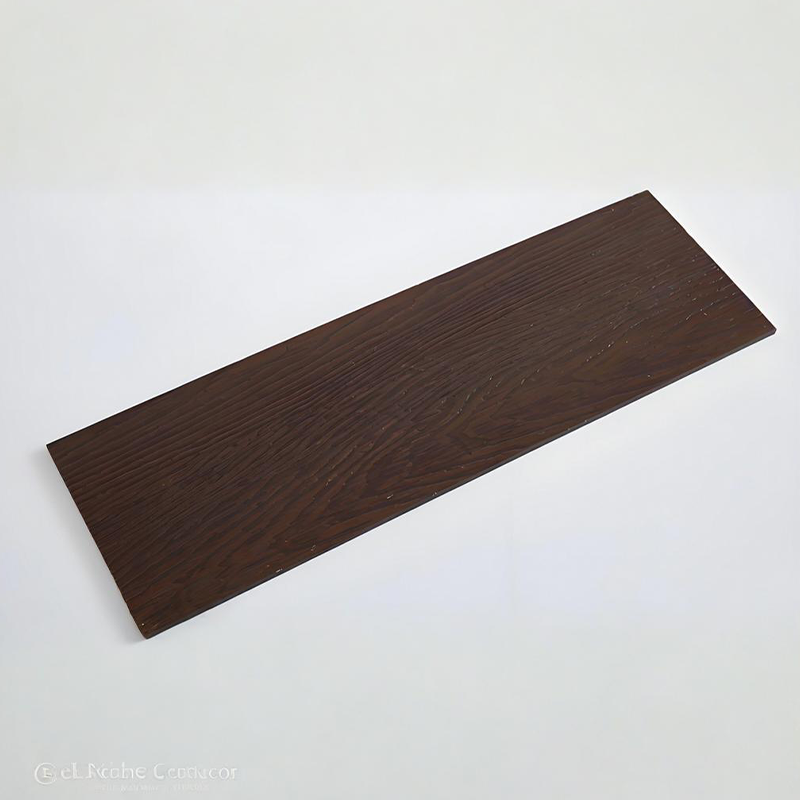
Siding Plank fiber cement weatherboard with cedar grain
Cedar Look Siding Options Compared
Wood grain siding is now made from several materials that may look similar from the curb but differ greatly in fire, moisture and maintenance performance.
Vinyl
Vinyl is the lowest-cost option and needs no painting. Its embossed grain can look convincing from the street, though the surface sheen and visible panel seams often give it away up close. Vinyl’s biggest weakness is heat: standard vinyl siding begins to distort at around 170°F (77°C), and sunlight reflected from nearby energy-efficient windows has been known to warp panels.
Aluminum and Steel
Metal siding with a printed wood grain finish is noncombustible, light and long-lasting. However, the wood effect is a printed coating on a thin metal skin, and panels can dent from hail or impact. Once a coating is damaged, steel can rust at exposed edges.
Engineered Wood
Engineered wood siding is made from wood strands or fibers bonded with resins and waxes, then pressed into boards with an embossed grain. It looks and cuts much like real wood and is lighter than fiber cement. Because it is still a wood-based product, it relies on its factory finish and sealed edges to resist moisture, and it typically needs repainting on a shorter cycle than fiber cement.
Fiber Cement
Fiber cement combines cement, sand and cellulose fibers, and is pressed with a deep wood grain texture before curing. The result is rigid, lies flat on the wall and is noncombustible. It does not rot and is not a food source for termites.
Fiber Cement Siding vs Wood Siding
For homeowners who like cedar but not its upkeep, the real decision often comes down to fiber cement versus wood. Here is how they compare on the factors that matter most.
Lifespan. Fiber cement does not rot or decay, and it keeps its shape over decades. Real cedar can last for many years with good maintenance, but its service life depends heavily on how consistently it is refinished and how well it is kept dry.
Maintenance. Fiber cement generally needs only occasional washing and a repaint at much longer intervals. Cedar needs regular stain or sealer, plus checks for rot, splitting and insect damage.
Fire safety. Fiber cement siding is recognized as noncombustible under wildfire building requirements such as California’s Chapter 7A. Untreated wood is combustible and must be fire-retardant treated or specially detailed to meet the same requirements.
Moisture and pests. Fiber cement is unaffected by fungi and termites. Cedar heartwood resists them naturally, but sapwood and wet areas remain vulnerable.
Dimensional stability. Fiber cement moves very little with changes in moisture. Wood swells, shrinks and can cup or split as it wets and dries.
Lifetime cost. Installed costs for the two are often in a similar range, but fiber cement avoids the repeated cost of refinishing, so it usually costs less over the life of the building.
Wood still has genuine strengths. Real cedar offers natural grain that no reproduction fully matches, it is a renewable material with relatively low production energy, and it is lighter and easier to cut on site. For owners who value an authentic natural material and are willing to maintain it, cedar remains a valid choice.
For most projects, however, especially in rainy, humid or wildfire-prone regions, or where owners want a facade that looks good for decades with little effort, fiber cement is the more practical way to achieve the cedar look.
Design Ideas for Wood Grain Fiber Cement Siding
A wood grain fiber cement facade offers plenty of design freedom.
Emphasize horizontal lines. Narrow planks installed in overlapping horizontal rows create the classic shadow lines of traditional cedar siding and make a building look longer and lower.
Choose single-tone or two-tone finishes. A single color gives a clean, painted-wood look. Two-tone finishes add depth to the grain and come closer to the variation of stained timber.
Mix materials. Pair wood grain siding with stone, brick or smooth panels to highlight entrances, gables or upper floors.
Combine orientations. Horizontal planks on the main walls with vertical board and batten siding on gables or bays add contrast without changing materials.
Match the trim. Color-matched corners, fascia and window trim give a unified, finished appearance.
Pick the plank width to suit the building. Narrower planks produce tighter, more traditional shadow lines, while wider planks read as bolder and more contemporary and cover the wall with fewer courses.
Because the grain is pressed into the board rather than printed on it, the texture stays visible under any color, from warm cedar browns to modern charcoals.
Siding Plank: Fiber Cement Board with Cedar Wood Grain Pattern
Siding Plank is New Element’s fiber cement board with a cedar wood grain pattern, also known as weatherboard. It is designed for building exteriors that emphasize horizontal lines and layered walls, particularly low-rise homes and American country-style designs.
Sizes and finishes
Length × width: 3050 × 192 mm and 3050 × 241 mm (other sizes on request)
Thickness: 7.5 mm and 9 mm
Surface: single-tone or two-tone
Colors: a range of standard colors plus custom colors
Physical properties
Density: ≥1.25 g/cm³
Bending strength: ≥16 MPa oven-dry, ≥12 MPa water-saturated
Water absorption: ≤38%
Moisture movement: ≤0.25%
Thermal conductivity: ≤0.30 W/(m·K)
Durability tests: water impermeability, freeze-thaw, heat-rain, warm water and soak-dry tests passed
Composition: 100% asbestos-free
As one of New Element’s termite-resistant exterior fiber cement boards, Siding Plank delivers the warmth of cedar without its maintenance demands.
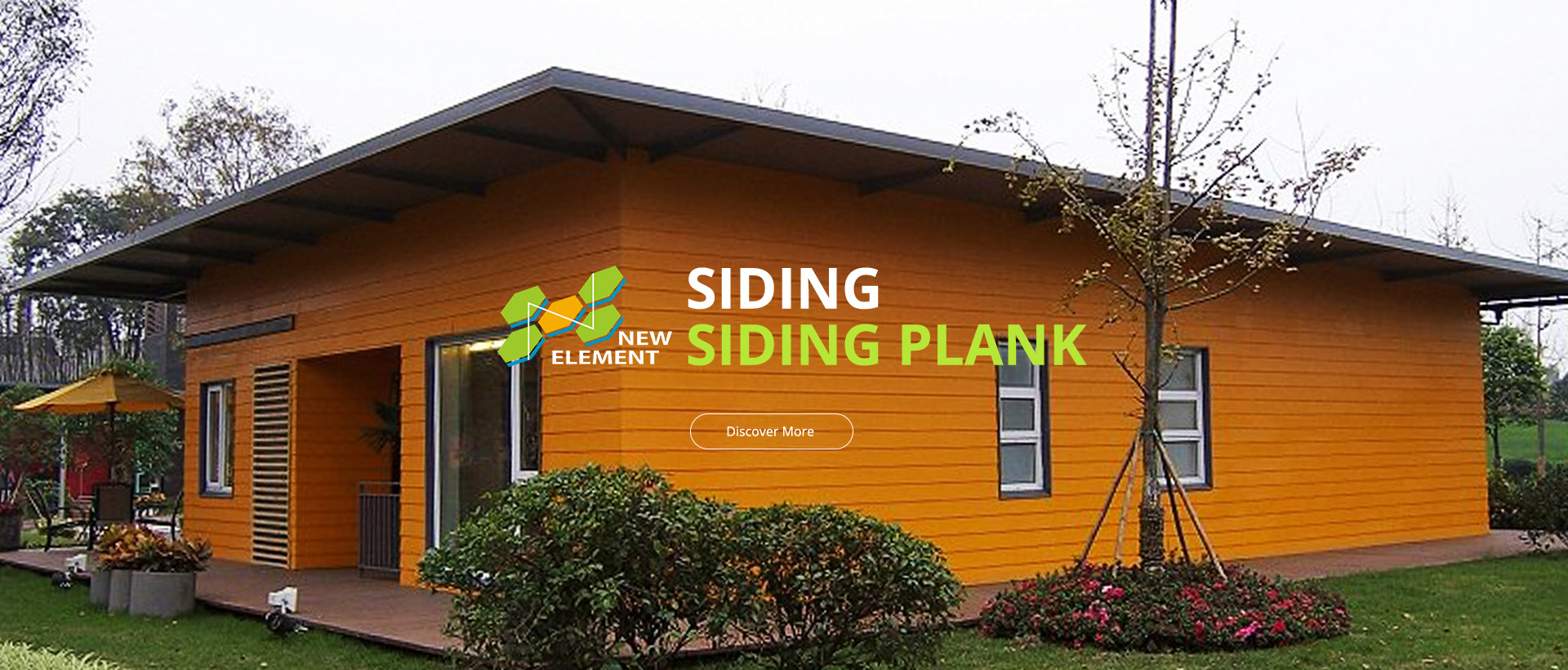
Siding Plank single-tone and two-tone finishes
Installation and Maintenance Tips
Good installation is what turns a durable material into a durable wall.
Start with a drained wall. Install planks over a continuous water-resistive barrier. In wet or exposed climates, fixing the planks over battens to create a rainscreen system lets any water behind the siding drain and dry.
Keep laps and fastening consistent. Maintain a uniform overlap between courses, fix into framing or battens with corrosion-resistant fasteners, and follow the manufacturer’s edge distance and spacing.
Leave room at joints. Allow small gaps at butt joints, corners and trim, and seal them with a sealant suited to fiber cement.
Control cutting dust. Fiber cement can contain up to 50% crystalline silica. NIOSH recommends cutting outdoors where possible, using shears or saws fitted with dust collection and vacuum extraction, and wearing suitable respirators. Never dry-sweep or blow dust away with compressed air.
Protect cut edges. Seal or touch up field-cut edges as recommended, especially on painted finishes.
Clean, don’t refinish. Wash the siding periodically with water and a soft brush to remove dirt. Avoid high-pressure washing close to the surface.
Cedar look siding lets you enjoy the warmth of wood without constant refinishing. Fiber cement delivers that look with noncombustible, rot-proof durability. Contact New Element for Siding Plank samples, color options and project support.